

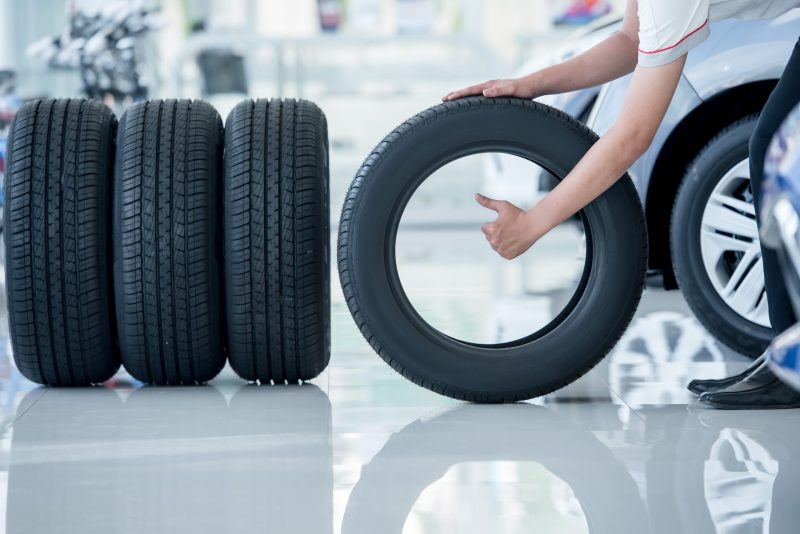
When it comes to road safety, your tires are literally where the rubber meets the road. Thousands of car accidents are caused each year by tire failure. But with proper tire care and prompt replacement of worn-out or damaged tires, you’re unlikely to ever experience a skid or blowout. If you ever notice the following six issues, visit your local Chevy dealer for new tires right away.
Does Your Chevy Need New Tires?
Shallow Tread Depth
The lifespan of tires usually ranges from four to six years. Even with perfect upkeep, tire tread depth eventually diminishes until it’s no longer safe for driving.
As in most states, Arizona has a minimum legal tread depth of 2/32 of an inch. Periodically measure the tread depth on your tires, and when it approaches this figure, it’s best to have your tires replaced.
Blistering Tire Rubber
A tire with visible blisters in the rubber isn’t safe to drive upon and should also be replaced. Blisters often indicate internal damage: perhaps even an internal puncture.
When the inner tubing of a tire becomes punctured by a severe impact with a pothole or curb, the air can start to leak out. It then becomes trapped under the upper rubber layers, causing the blistering.
Deep Cuts or Cracks
Rather like human wrinkles, tiny cuts, and cracks are a harmless sign of age in most tires. But when a cut or crack is deep and long, extending to the edge of the rubber, the structural integrity of that tire might be compromised.
Piercing Objects
Tires sometimes pick up sharp stones, nails, screws, or pieces of broken glass from the road. If you find an object like this piercing your tire rubber, pull it out to see if it is concealing a puncture.
Persistent Air Loss
Sometimes punctures can be very small and subtle. You might only notice a steady inexplicable loss of air from one particular tire.
Any such persistent air loss should be treated with suspicion. If you even suspect a puncture, it’s safest to change the tire before you have a blowout.
Reduced Handling
As a Chevy driver, you know how smooth your handling ordinarily is. If your handling starts to worsen, your tires might be wearing down unevenly, or one of them could be damaged. Examine all four tires with care, and it might be best to have a technician take a look.
Have Your Tires Checked at Your Local Chevy Dealer
It’s generally recommended to have your tires rotated every six months. This also gives the technician a chance to inspect your tires for any signs of harm and provide you with a rough prediction of how much longer they’ll last. In addition to this, it’s good maintenance practice to check your own tire pressure and condition at least once a month.
Have your tires examined, rotated, or replaced today at Crain Chevrolet. We’ve been proudly assisting
Connect with us


